

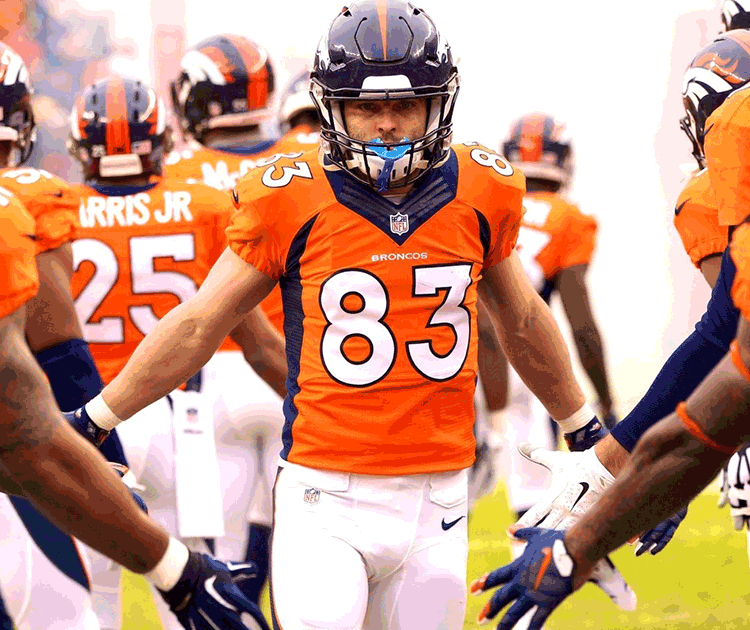
Only three things in life are certain: death, taxes, and South Georgia’s love of football. Indeed, we love football more than we love some of our own family members. Okay, that last part may not be true for everyone, but let’s not act like we don’t all have that one annoying family member at Thanksgiving dinner that we try to drown out with the sound of the Cowboys or Lions losing their annual Turkey Day game. Whether it be your local high school, your college alma mater, or your favorite NFL team, chances are you plan your fall weekends around those events. We either pack the stands, sit in front of the TV, or (if you’re an unfortunate person that has prior obligations) you tune in on the radio or your mobile device. Simply stated, football is king down here.
However, something that is often overlooked is how dangerous the sport is. Football by far is the most dangerous sport in America, and what is most concerning is that high school players face the largest risk of receiving a concussion. In 2013, The National Institute of Medicine released a study that showed for every 10,000 games and practices, a high school player would receive 11.2 concussions. That estimate is conservative given the researchers only used reported concussions in the study. Something more alarming: A recent Harvard study found that only one in 27(!) head injuries are reported from football players. It’s to be expected, though; to football players, it seems like the right thing to do. You have to ignore the pain and play anyway so you don’t let your team down.
The effects of concussions on youth are unclear, but a study performed by Boston University showed that 76 of the 78 deceased NFL players they tested were positive for Chronic Traumatic Encephalopathy. For those of you who don’t know, CTE is a brain disease that causes degeneration of brain cells, which commonly leads to memory loss, confusion, impaired judgment, impulse control problems, aggression, depression, and, eventually, progressive dementia. The CTE Center at Boston University stated that this condition was originally discovered in the 1920s and was common among boxers then but now is more common among football players and other athletes who have repeated brain trauma.
Former NFL QB and 2016 Hall-of-Fame inductee Brett Favre has played 30-plus years of football in his lifetime. In 2013 he spoke with NBC’s Matt Lauer and opened up about his concussions’ effects. “I don’t remember my daughter playing soccer, one summer,” Favre said. “I don’t remember that. So that’s a little bit scary to me.” Favre does not have a son, but he expressed apprehension saying that he would be “real leery” of letting a son play football if he had one. Favre’s concern is not without merit. The dangers of football are real, and the list of players dying from brain trauma grows every day.
Things are improving, though. In 2010 the NFHS approved new concussion protocols that require coaches to attend concussion symptom seminars and require diagnosed players to get a medical clearance from a trained medical professional before returning to the team. New helmet technology that lowers the risk for concussions, like the Riddell SpeedFlex, is significantly improving. As concussion awareness grows, we see a growth in self-reported concussions and players being more concerned about their safety. Also, rule changes such as the targeting rule have significantly deterred big hits and forcible blows to the heads of players. While it is a controversial rule, none can argue that it has not made the game safer for the players.
Ultimately, concussions are and always will be a part of the game of football. However, we must exhaust every effort to make the game safer for the players. Whether that be buying the safest equipment, changing rules, or funding more research, we must not be content with the status quo of player safety. I love this game as all of you do, but I want to see that our players are taken care of. They put in the time and effort on the practice field to give us a show on Friday night, so we must put in the effort to make sure they’re safe during practice and on Friday nights.
ITG Web Content
Concussions In Football
By Zack Pine
Photo from bleacherreport.com