

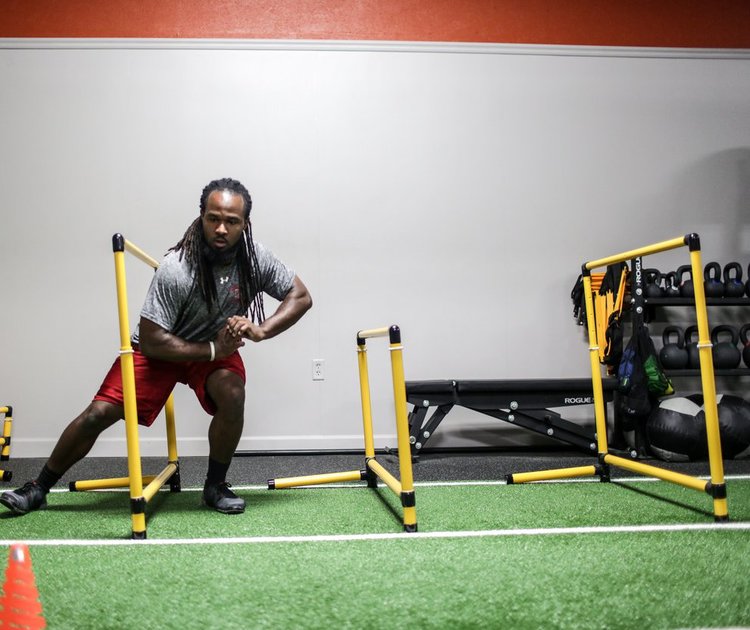
One of the most common knee injuries among athletes is an anterior cruciate ligament sprain or tear. An ACL injury is when there is an over-stretching or tearing of the ligament. This tear may be partial or complete depending on how serious the injury is. This injury usually occurs when the athlete undergoes a rapid change in direction, slowing down from running, or landing from a jump. At the time of the injury, the athlete will experience a “pop” in their knee which may feel like the knee hyper extended. The athlete may or may not be able to continue in competition immediately following the injury and in some cases will have intense swelling in their knee.
Research has shown that an ACL injury has an annual incidence of more than 200,000 cases. Also, an estimated 70% of ACL injuries are sustained through non-contact mechanisms, while the remaining 30% result from direct contact. ACL injury is most common in patients 15-45 years of age and it occurs in males due to greater numbers of male sports participants, however females have a higher risk of being injured. NCAA statistics found that female athletes are 2-8 times more likely to sustain an ACL injury playing sports. A few factors that are speculated to increase risk of ACL injury in females include hamstring flexibility, muscle development, hormonal differences, ACL size, and the “Q Angle”. Research has shown that having a wider pelvis is linked to having a larger “Q (Quadriceps) Angle” (the angle where the femur meets the tibia). (Anterior Cruciate Ligament Injury, Department of Orthopedic Surgery UCSF).
ACL injury prevention tips:
- Warm up– It is important to always warm-up before exercising, practicing, and competing. A proper warm-up should include simple speed and agility drills, dynamic stretches, and specific exercises focusing on the athletes physical asymmetries/limitations.
- Strength – Strength is important in athletes to make them move better to combat asymmetries produced from sport specific movements. This in turn will help reduce the risk of injury. Having a good strength program will make a balanced symmetrical athlete which will prepare them for competition.
- Agility – Practicing agility drills are important so that when the athlete is changing direction on the field, they will be more stable. This in turn will help an athlete’s balance on the field making it less likely to experience and injury.
- Jumping and Landing – Balanced muscle strength is crucial to perform proper jumping mechanics. Athlete’s should keep a wide, athletic stance and their knees and feet shoulder-width apart and not let the knees collapse inward While landing from a jump, make sure that your knees bend softly. Landing with good control and the correct posture will prevent injury and reinforce good mechanics (ACL Prevention Program, South Shore Hospital; Orthopedic, Spine and Sports Therapy).
Be sure to emphasize quality over quantity. It doesn’t matter how many times you practice something, it matters how you do it. Rest your body! Don’t let your body get tired to the point that your technique during your performance is sloppy. Rest is essential for your muscles and joints so that they can recover and help you perform better as an athlete. Let’s be smart and start helping our athletes stay injury free.
Kelsey Rasmussen
June 2016
Photos By: Edge Performance Gym